
Tishrei | Ethanim – The Month of Beginning, the Flowing Brooks, and the Strong
 
The biblical month of Tishrei | Ethanim is the seventh biblical month. It is the month that bears the beginning of the new biblical year (note: Rosh ha-Shana, beginning of the cycle of blessing), which has a special significance.
 
The month name ‘Tishrei’ means ‘beginning’ and ‘Ethanim’ encompasses the ‘month of flowing brooks’ or ‘steady rain’.
 
It is the month assigned to the tribe of ‘Ephraim’ who was the second son of Joseph. Joseph gave rise to Manasseh and Ephraim, though Ephraim, as the second born, was given preference over Manasseh in the blessing by his grandfather Jacob (cf. Genesis 48:17-19).
 
Genesis 48:17-19:
17 When Joseph saw his father placing his right hand on Ephraim’s head he was displeased; so he took hold of his father’s hand to move it from Ephraim’s head to Manasseh’s head.
18 Joseph said to him, “No, my father, this one is the firstborn; put your right hand on his head.”
19 But his father refused and said, “I know, my son, I know. He too will become a people, and he too will become great. Nevertheless, his younger brother will be greater than he, and his descendants will become a group of nations.”
 
It was in Joseph’s interest to reverse the order of blessing of his father Jacob, but which was not granted to him. This reveals to us that it was God’s plan to proceed in this way, namely to shape the future through prophetic revelation. God had already established something in His predestined plan that could not be reversed by the will of man (cf. Psalm 33:4).
 
Psalm 33:4:
4 For the word of the Lord is right and true; he is faithful in all he does.
 
The name ‘Manasseh’ means, ‘the one who makes forget’, where the name ‘Ephraim’ means ‘double fruitfulness’.
 
The name meaning of Ephraim is related to the redemptive plan of Joseph. Through the two given names of Joseph’s sons, an important principle is unfolded, namely, to be focused on letting go of the past and looking confidently toward the fruitful future.
 
‘Ephraim’ is the 7’th tribe of Israel and literally means ‘double fruitfulness’; ‘double inheritance’. Furthermore, Ephraim bears the ‘flourishing fruit tree’ as a tribe symbol in the dimension of Joseph (cf. Genesis 49:22-26).
 
Genesis 49,22-26:
22 “Joseph is a fruitful vine, a fruitful vine near a spring, whose branches climb over a wall.
23 With bitterness archers attacked him; they shot at him with hostility.
24 But his bow remained steady, his strong arms stayed limber, because of the hand of the Mighty One of Jacob, because of the Shepherd, the Rock of Israel, 25 because of your father’s God, who helps you, because of the Almighty, who blesses you with blessings of the skies above, blessings of the deep springs below, blessings of the breast and womb.
26 Your father’s blessings are greater than the blessings of the ancient mountains, than the bounty of the age-old hills. Let all these rest on the head of Joseph, on the brow of the prince among his brothers.
 
The biblical feasts celebrated in the month of Tishrei | Ethanim are as follows:
 
1. Rosh ha-Shana – Feast of Trumpets => New Year in the blessing cycle of God (cf. Numbers 29:1)

2. 10’th day – Yom Kippur => The Great Day of Atonement (cf. Leviticus 16:29-31)

3. 15’th – 21’st day – Sukkot => Feast of Tabernacles (cf. Exodus 23:16; Leviticus 23:24; Deuteronomy 16:13)

4. first fruits of wine and oil

5. 22’nd – day => last day of the Feast of Tabernacles (cf. Leviticus 23:30; Numbers 29:35; Nehemiah 8:18; John 7:37).
 
The Increase of the Flow of the Spirit and the New Things
 
In the month of Tishrei | Ethanim we may expect the LORD to increase the flow of His Spirit in us in which we claim for ourselves the fullness of heaven. This power of our spiritual flow serves to make it flow to the people who are in need of it, so that they may be refreshed and continue to grow (cf. John 4:14).
 
John 4:14:
“… 14 but whoever drinks the water I give them will never thirst. Indeed, the water I give them will become in them a spring of water welling up to eternal life.”
 
Tishrei | Ethanim is the month when people who have started something new in the will of God are encouraged by the prophetic word to continue to step into a new field (Note: an old year in the blessing cycle has ended and a new year has begun => old things go and new plans flourish => double fruitfulness).
 
It is important to understand here that the righteous always greens and produces fruit in due time (cf. Psalm 1:3; Jeremiah 17:7-8).
 
Psalm 1:3:
3 That person (Note: the righteous) is like a tree planted by streams of water, which yields its fruit in season and whose leaf does not wither – whatever they do prospers.
 
Jeremiah 17:7-8:
7 “But blessed is the one who trusts in the Lord, whose confidence is in him.
8 They will be like a tree planted by the water that sends out its roots by the stream. It does not fear when heat comes; its leaves are always green. It has no worries in a year of drought and never fails to bear fruit.”
 
The LORD begins something new this month and concludes the old (Note: Rosh ha-Shana => biblical New Year in the blessing cycle). This process is accompanied by a great increase in the anointing of the Holy Spirit and priestly ministry, which contributes to multiplicity as the pomegranates ripen during this time (cf. Exodus 28:33).
 
Exodus 28:33:
33 Make pomegranates of blue, purple and scarlet yarn around the hem of the robe, with gold bells between them.

It is important that we respect and protect the increase of the anointing of the Holy Spirit.
As it is required that we are ready for the renewing of our minds, since at this time the fields in Israel are plowed to receive the sowing for the new season (cf. Romans 12:2 i.c.w. Ephesians 4:23).
 
Romans 12:2:
2 Do not conform to the pattern of this world, but be transformed by the renewing of your mind. Then you will be able to test and approve what God’s will is – his good, pleasing and perfect will.
 
Ephesians 4:23:
… 23 to be made new in the attitude of your minds; …
 
Being Attentive to the ‘Sound of Issachar’ and Abstinence
 
In the month of Tishrei | Ethanim, it is significant that we pay attention to the sound of the tribe of Issachar (Note: the prophets) in order to understand the times related to the Feast of Trumpets => Rosh ha-Shana (cf. Numbers 29:1 i.c.w. Numbers 10:1-2; 1 Chronicles 12:32).
 
Numbers 29:1:
1 “ ‘On the first day of the seventh month hold a sacred assembly and do no regular work. It is a day for you to sound the trumpets.
 
Numbers 10:1-2:
1 The Lord said to Moses: 2 “Make two trumpets of hammered silver, and use them for calling the community together and for having the camps set out.
 
1 Chronicles 12:32:
… 32 from Issachar, men who understood the times and knew what Israel should do – 200 chiefs, with all their relatives under their command; …
 
The blowing of the trumpet or Shofar was the sound that announced the new year to the people of Israel.
 
It is crucial that we separate ourselves from false patterns of life or thinking that are contrary to the will of the Heavenly Father and repent in order to come into agreement with His will.
Fasting or abstinence plays an important role in this.

Abstinence and Fasting can serve as a crucial ‘weapon’ for breakthrough for the coming months in the New Year (cf. Leviticus 16:29-31 i.c.w. Luke 4:2.14).
 
Leviticus 16:29-31:
29 “This is to be a lasting ordinance for you: On the tenth day of the seventh month you must deny yourselves and not do any work – whether native-born or a foreigner residing among you – 30 because on this day atonement will be made for you, to cleanse you. Then, before the Lord, you will be clean from all your sins.
31 It is a day of sabbath rest, and you must deny yourselves; it is a lasting ordinance.
 
Luke 4:2.14:
… 2 where for forty days he (Note: Jesus) was tempted by the devil. He ate nothing during those days, and at the end of them he was hungry. …
14 Jesus returned to Galilee in the power of the Spirit, and news about him spread through the whole countryside.
 
The New Wineskin and the Expansion
 
This month we can surrender to the Lord in the following way, asking Him to transform us into the new structure of the wineskin, so that we are able to receive His new oil and wine. This challenges and expands us, as well as helps to restore believers who have fallen into hurt in their walk in Christ Jesus (Note: time of the offering of the firstfruits of wine and oil; cf. Isaiah 54:2 i.c.w. Mark 2:22: Luke 10:34).
 
Isaiah 54:2:
2 “Enlarge the place of your tent, stretch your tent curtains wide, do not hold back; lengthen your cords, strengthen your stakes.

Mark 2:22:
“… 22 And no one pours new wine into old wineskins. Otherwise, the wine will burst the skins, and both the wine and the wineskins will be ruined. No, they pour new wine into new wineskins.”
 
Luke 10:34:
34 He went to him and bandaged his wounds, pouring on oil and wine. Then he put the man on his own donkey, brought him to an inn and took care of him.
 
The extension is indicated by the tents of the Tabernacles during the time of Sukkot, the Feast of Tabernacles.
 
Moreover, the expansion of the new wine also implies the transition in faith to enter into the new.
In this regard, the memory of the successful faith projects of the transition from the past can serve as encouragement.
 
Honoring the anointing of the forefathers can also be significant on a special day this month (cf. Genesis 26:18; Psalm 103:2).
 
Genesis 26:18:
18 Isaac reopened the wells that had been dug in the time of his father Abraham, which the Philistines had stopped up after Abraham died, and he gave them the same names his father had given them.
 
Psalm 103:2:
2 Praise the Lord, my soul, and forget not all his benefits – …
 
As the seventh month, Tishrei carries the head of the year, Rosh ha-Shana, whose arrangement in the seventh position indicates the completeness or complete work of God’s creation.
Entering this time frame implies that we have already passed through two feast cycles – Passover and Shavuot/Pentecost – and thus show readiness to enter another cycle of His glory – Sukkot.
 
Rosh ha-Shana, as the head of the year in the biblical annual cycle of blessing, is a day given to us by the Heavenly Father in order to receive revelation for the new year. It is the care of the Heavenly Father that brings forth a new beginning.
 
On Rosh ha-Shana, ‘the peak’ of the new year, it is wise in the fellowship of saints to seek the LORD and ask Him for a strategy, namely to get to the point where you are certain that you are going ahead in what the LORD is doing.
 
Amen and Amen.
 
In His Wisdom,
 
Daniel Glimm
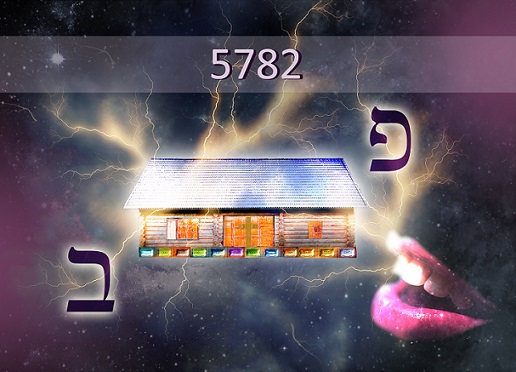
Pe Beth 5782
(artwork from the team of CRAZYCHRISTIANS)
 
Beloved People of God,
 
This prophetic word is meant to serve us as a piecework and guideline for the next biblical year 5782/2022. We encourage every reader to pray over this word and to proclaim the plan of the Father over the coming year.
 
September, 6'th, 2021, and the New Biblical Year 5782
 
On the eve of 09/06/2021 we enter the new biblical year 5782 together with the Jewish people. This is of importance to us who have been grafted as wild olive shoots into the precious olive tree, as we partake in the fatness as the anointing of the root (cf. Romans 11:17-18).
 
Romans 11:17-18:
17 If some of the branches have been broken off, and you, though a wild olive shoot, have been grafted in among the others and now share in the nourishing sap from the olive root, 18 do not consider yourself to be superior to those other branches. If you do, consider this: You do not support the root, but the root supports you.
 
The Apple of God’s Eye
 
According to Zechariah 2:8b, Israel is the apple of God’s eye with Jerusalem functioning as His pupil; so for us as Christians from the gentile nations it is beneficial to look at our lives and environment through Israel. This will result in walking confidently and with enlightened eyes into our future with Jesus Christ.
 
Zechariah 2:8b:
… 8b for whoever touches you (Note: Israel) touches the apple of his eye.
 
The revelations we receive by this approach contain strategies helping us to position our lives in the center of the will and peace of God, just as Epaphras prayed (cf. Colossians 4:12).
 
Colossians 4:12:
12 Epaphras, who is one of you and a servant of Christ Jesus, sends greetings. He is always wrestling in prayer for you, that you may stand firm in all the will of God, mature and fully assured.
 
The Expression of Knowledge
 
As God’s people we are currently in the biblical cycle of the ‘eighties’ that are connected to the Hebrew letter ‘Pe’ which refers to ‘mouth’. This is the decade connected to 'the verbal expression of knowledge', and thus is the basis for the coming years within this biblical decade (cf. Habakkuk 2:14 i.c.w. Proverbs 18:21).
 
Habakkuk 2:14:
14 For the earth will be filled with the knowledge of the glory of the LORD as the waters cover the sea.
 
Proverbs 18:21:
21 The tongue has the power of life and death, and those who love it will eat its fruit.
 
The Hebrew Letter ‘Beth’
 
The biblical year 5782 is connected with the Hebrew letter ‘Beth’, which also carries the numerical value ‘2’.
 
The Hebrew letter ‘Beth’ means ‘house’ and is also used for the ‘temple of God’. Furthermore, it has the pictographic representation of the ‘layout of a house’ and indicates the ‘inside of a house’.
 
The word ‘house – bajit’ appears for the first time in Genesis 7:1 and finds there its use in connection with the fellowship within the family of ‘Noah’ (Note: ‘rest’) as a fellowship of promise (cf. Hebrews 4:1ff.).
 
Genesis 7:1:
1 The Lord then said to Noah, “Go into the ark, you and your whole family, because I have found you righteous in this generation.
 
Since Jesus was born in ‘Bethlehem’, the ‘house of bread’, and is also called the ‘bread of life’ and the ‘Word of God’, it is clear that the quality of the Word of God within the fellowship of saints moving forward in Christ Jesus is at stake (cf. Micah 5:2 i.c.w. John 6:35; John 1:1; Revelation 19:13).
 
Micah 5:2:
2 “But you, Bethlehem Ephrathah, though you are small among the clans of Judah, out of you will come for me one who will be ruler over Israel, whose origins are from of old, from ancient times.”
 
John 6:35:
35 Then Jesus declared, “I am the bread of life. Whoever comes to me will never go hungry, and whoever believes in me will never be thirsty.
 
John 1:1:
1 In the beginning was the Word, and the Word was with God, and the Word was God.
 
Revelation 19:13:
13 He is dressed in a robe dipped in blood, and his name is the Word of God.
 
Furthermore, the Word of God as the Torah, meaning the teaching of God, begins with the Hebrew letter ‘Beth’ (Note: ‘Bereshit’ means ‘in the beginning’), thus heralding the beginning of God’s creation. This ‘house’ comprises a ‘spiritual house’ since it comes forth from the mouth of God and God is Spirit (cf. John 4:24a).
 
John 4:24a:
24a God is spirit, …
 
Every ‘beginning’ initiated by God bears the distinction of being His own, since everything ‘first’ belongs to the LORD, sanctifying things to come as well as producing blessings (cf. Romans 11:16 i.c.w. Ezekiel 44:30; Proverbs 3:9-10).
 
Romans 11:16:
16 If the part of the dough offered as firstfruits is holy, then the whole batch is holy; if the root is holy, so are the branches.
 
Ezekiel 44:30:
30 The best of all the firstfruits and of all your special gifts will belong to the priests. You are to give them the first portion of your ground meal so that a blessing may rest on your household.
 
Proverbs 3:9-10:
9 Honor the Lord with your wealth, with the firstfruits of all your crops; 10 then your barns will be filled to overflowing, and your vats will brim over with new wine.
 
The Hebrew word for ‘beginning’ also means ‘first, best, first fruit, birthplace of a time dimension in the form of a starting point’ with which the ‘inside of the house’ is filled. (word explanation taken from the Elberfelder study bible to the word ‘beginning – rē’šît’ with the word key number: 7395).
 
Thus, these explanations point to the quality of the spiritual fellowship of saints who have allowed themselves to be joined together by God’s Spirit as living stones to bear His presence together and glorify Him as Father (cf. 1 Peter 2:5 i.c.w. John 4:24).
 
1 Peter 2:5:
… 5 you also, like living stones, are being built into a spiritual house to be a holy priesthood, offering spiritual sacrifices acceptable to God through Jesus Christ.
 
John 4:24:
“… 24 God is spirit, and his worshipers must worship in the Spirit and in truth.”
 
The Impact of Eternity in Christ on Temporal Time
 
In Christ Jesus, the supernatural realm as the eternity impacts the natural realm as the temporary time in order to bear witness to the dimension of the Father (cf. John 3:31 i.c.w. John 14:9b).
 
John 3:31:
31 The one who comes from above is above all; the one who is from the earth belongs to the earth, and speaks as one from the earth. The one who comes from heaven is above all.
 
John 14:9b:
… 9b Anyone who has seen me (Note: Jesus Christ) has seen the Father. …
 
The impact of the supernatural world through Christ Jesus into the realm of the natural world reveals the eternal standard of God, which results in each person having to make a decision as to which world they will live or act from (cf. John 8:23).
 
John 8:23:
23 But he continued, “You are from below; I am from above. You are of this world; I am not of this world. …”
 
This is about the communication of the Father speaking from His inner being in His wisdom to the ‘outer world’. This wisdom can act like a wall for people who are not spiritually minded and move in humanism, so that they do not come to the knowledge of the truth because they define themselves by their own knowledge and human standards (cf. 1 Corinthians 1:20-25 i.c.w. 1 Peter 5:5b).
 
1 Corinthians 1:20-25:
20 Where is the wise person? Where is the teacher of the law? Where is the philosopher of this age? Has not God made foolish the wisdom of the world?
21 For since in the wisdom of God the world through its wisdom did not know him, God was pleased through the foolishness of what was preached to save those who believe.
22 Jews demand signs and Greeks look for wisdom, 23 but we preach Christ crucified: a stumbling block to Jews and foolishness to Gentiles, 24 but to those whom God has called, both Jews and Greeks, Christ the power of God and the wisdom of God.
25 For the foolishness of God is wiser than human wisdom, and the weakness of God is stronger than human strength.
 
1 Peter 5:5b:
… 5b All of you, clothe yourselves with humility toward one another, …
 
What is Humanism?
 
=> Humanism is the government of the flesh and the soulish over the spiritual as well as the exaltation of the earth and its persecution over the heavenly.
The goal of humanism is to rob the purpose of God through a proud thought pattern that exalts itself above the knowledge of God.
Humanist assertions support the view that humans are their own God and thus the creators and masters of their own destiny. This results in a breeding ground for atheism, which is associated with a reversion to ancient forms of worship and encourages the influx of spiritual powers of evil that support or inspire them.
Humanism is designed by Satan to bring about the independence of creation from its Creator, which includes self-glorification and a strict self-governing existence without accountability to anything not touched or tasted by the intellect of the five senses. <= (The explanation put in ‘=>’ is based on a definition to the term ‘humanism’ from the ‘Prophet’s Dictionary’ by Paula A. Price, Ph. D.; page 269)
 
As we move in the decade of ‘Pe – mouth’ from which the ‘Beth – house’ emerges it is revealing to us that the ‘house of creation’ encompasses life in the ‘fullness of God’ which, like the universe, is continuously expanding.
 
The dimension of ‘Beth’ includes also the ‘apostolic quality’ which has its seat in the instruction of God and in the ‘triumph of Jesus’, since the Hebrew word for ‘house’ carries the numerical value ‘412’ and is related to other aspects of the communicating of God (cf. Acts 2:42.46; Acts 5:42).
 
Acts 2:42.46:
42 They devoted themselves to the apostles’ teaching and to fellowship, to the breaking of bread and to prayer. …
46 Every day they continued to meet together in the temple courts. They broke bread in their homes and ate together with glad and sincere hearts, …
 
Acts 5:42:
42 Day after day, in the temple courts and from house to house, they never stopped teaching and proclaiming the good news that Jesus is the Messiah.
 
The Birthplace of Jesus and the ‘Beth’
 
Our Lord Jesus was born in a simple shelter, which according to Isaiah 1:3a is associated with a manger and two animals, namely an ox and a donkey (cf. Luke 2:12).
 
Isaiah 1:3a:
3a The ox knows its master, the donkey its owner’s manger, …
 
Luke 2:12:
“… 12 This will be a sign to you: You will find a baby wrapped in cloths and lying in a manger.”
 
We recognize in the two animals mentioned a reference to the Hebrew letter ‘Beth’, so that this is about the fellowship in the time of the Father. The word for Father in Hebrew is ‘Abba’ and begins and ends with an ‘Aleph’ which means ‘bull’, and the face of the ‘bull/ox’ is related to the ‘power of the Father’. The present ‘donkey’ is related to the ‘discernment of times’ as it is the symbol of the tribe of Issachar, who recognized and understood the times (cf. Genesis 49:14 i.c.w. 1 Chronicles 12:32).
 
Genesis 49:14:
14 “Issachar is a rawboned donkey lying down among the sheep pens. …”
 
1 Chronicles 12:32:
… 32 from Issachar, men who understood the times and knew what Israel should do – 200 chiefs, with all their relatives under their command; …
 
Furthermore, there were two groups of people who honored Jesus in the beginning of His ministry. They were the wise men and the shepherds.
 
These two groups of people are indicative of discerning the times and faithful leadership, as well as the proper understanding of giving into the Kingdom and communicating divine revelation (cf. Matthew 2:9-11 i.c.w. Luke 2:8.15-19).
 
Matthew 2:9-11:
9 After they (Note: the wise men) had heard the king, they went on their way, and the star they had seen when it rose went ahead of them until it stopped over the place where the child was.
10 When they saw the star, they were overjoyed.
11 On coming to the house, they saw the child with his mother Mary, and they bowed down and worshiped him. Then they opened their treasures and presented him with gifts of gold, frankincense and myrrh.
 
Luke 2:8.15-19:
8 And there were shepherds living out in the fields nearby, keeping watch over their flocks at night. …
15 When the angels had left them and gone into heaven, the shepherds said to one another, “Let’s go to Bethlehem and see this thing that has happened, which the Lord has told us about.”
16 So they hurried off and found Mary and Joseph, and the baby, who was lying in the manger.
17 When they had seen him, they spread the word concerning what had been told them about this child, 18 and all who heard it were amazed at what the shepherds said to them.
19 But Mary treasured up all these things and pondered them in her heart.
 
Motto For The Year 2022
 
The Herrenhuter motto for the Gregorian year 2022 is taken from the Gospel of John 6:37, where it says:
 
John 6:37:
37 All those the Father gives me will come to me, and whoever comes to me I will never drive away.
 
Based on this scripture for the new Gregorian year 2022, it is clear that we as the people of God are encouraged to go boldly forward in the quality of the Word of God, which is Jesus Christ, and His instruction. And by doing so, it is that from the presence of the Sonship of God we allow the power of eternity to flow into temporary time.
 
This has the consequence that people decide for or also against the truth of God and thus choose their stay to live in the ‘upper’ enlightened or in the ‘lower’ unenlightened world.
 
Amen and Amen.
 
A spirited and sweet year 5782,
 
Daniel & Tina Glimm

Especially, at a time like this, it is essential that we, as believers in Christ, adjust our thoughts according to the revelatory truth. The Holy Spirit unlocks this truth for us at this time through the Word of God, so that we can accordingly go forward in that truth (cf. John 17:17 i.c.w. Romans 12:2; Ephesians 4:23).
 
John 17:17:
17 Sanctify them by the truth; your word is truth.
 
Romans 12:2:
2 Do not conform to the pattern of this world, but be transformed by the renewing of your mind. Then you will be able to test and approve what God’s will is – his good, pleasing and perfect will.
 
Ephesians 4:23:
… 23 to be made new in the attitude of your minds; …
 
Adjustment in God’s revelatory truth involves moving forward in the dimension of God’s advancing Word without allowing the past to block one’s way.
 
A failure to renew the spirit and mind according to the Word of God results in the power of the revelatory advancing Word of God ‘quarantining’ the apparent truth of the past. This means that by materializing it in the life of a believer, it can turn into the blocking substance in life.
 
Any unwillingness to look forward results in stagnation in the life of faith and prevents moving forward with the revelatory truth of God’s Word for this time and the time to come (cf. Genesis 19:26 i.c.w. Luke 9:62).
 
Genesis 19:26:
26 But Lot’s wife looked back, and she became a pillar of salt.
 
Luke 9:62:
62 Jesus replied, “No one who puts a hand to the plow and looks back is fit for service in the kingdom of God.”
 
The Fiery Salt and the Watching
 
As the church – the ekklēsia, we find ourselves in a time when we encounter believers who speak the truth of God’s Word, but because of their unwillingness to renew their minds, find themselves ‘stuck in a stagnation of truth’ filled without the fire of the Holy Spirit.
 
This is a ’solid standing substance of salt’ that has no living fire in it (cf. Mark 9:49-50).
 
Mark 9:49-50:
49 Everyone will be salted with fire.
50 “Salt is good, but if it loses its saltiness, how can you make it salty again? Have salt among yourselves, and be at peace with each other.”
 
Therefore it is necessary to live and to ‘watch’ in it. The ‘guarding’ is the general assignment of God, which has already been given to man since Adam, and which applies especially to the heart, to guard it as the seat of one’s own thoughts, feelings and decisions (cf. Genesis 2:15 i.c.w. Proverbs 4:22).
 
Genesis 2:15:
15 The LORD God took the man and put him in the Garden of Eden to work it and take care of it.
 
Proverbs 4:23:
23 Above all else, guard your heart, for everything you do flows from it.
 
We may realize that everything essential comes about by thoughts in life, because they lead to our decisions that can either stop us or lead us to our destiny. At best we focus our approximately 20.000 to 60.000 thoughts per day directly on the foundation of God’s word (cf. 1 Timothy 1:5).
 
1 Timothy 1:5:
5 The goal of this command (note: Torah = teaching) is love, which comes from a pure heart and a good conscience and a sincere faith.
 
This is the basis for the needed renewing of the mind or thoughts, which in themselves are designed to give impetus that in turn expresses itself through our decisions, words and deeds.
Every reaction as well action should without exception be decided by proven thoughts:
 
1.) of pure godly love,
2.) of a good clear conscience,
3.) of a genuine, sincere faith or understanding of values.
 
Part of an effective renewing of the mind is therefore a filtering process in which we use the word of God to identify single thoughts and to test by recurring thought-patterns (Note: ‘cluster’), whether they comply with God’s truth (cf. John 17:17 i.c.w. Romans 12:2).
 
John 17:17:
17 Sanctify them by the truth; your word is truth.
 
Romans 12:2:
2 Do not conform to the pattern of this world, but be transformed by the renewing of your mind. Then you will be able to test and approve what God’s will is – his good, pleasing and perfect will.
 
With life God also entrusted a heart to each person we may learn to watch over and to protect it effectively from certain dangers and influences in the course of life.
 
This process can only be successful when we understand and accept that no one else can be held responsible for our thinking but we personally.
 
Because the word of God is the only truth and contains everything essential to give us the greatest possible security in life, we can use it as a personal standard in any given situation and decision. God is love, and what He says regarding life in the natural and supernatural realm is absolutely trustworthy.
 
Devotion and submission to the LORD Himself, who lives in us in the person of the Holy Spirit, is the key aspect of renewing one’s mind. Only the saint, who repeatedly yields to the Holy Spirit and learns day after day from the Holy Spirit in relationship to Him as the teacher, will be able to lay down his thought patterns that are worldly or contrary to the Spirit, and be able to literally exchange it.

There is no other way to truly renewing one’s mind, because it is a basic principle that here as well only the LORD Himself can lead us to truth and repentance as well as cause us to turn from our old ways (cf. John 8:32 i.c.w. Romans 2:4).
 
John 8:32:
32 Then you will know the truth, and the truth will set you free.
 
Romans 2:4:
4 Or do you show contempt for the riches of his kindness, forbearance and patience, not realizing that God’s kindness is intended to lead you to repentance?
 
For this reason any existing degree of pride to rely on your own conclusions or beliefs deriving from personal evaluations, which are merely thoughts, is so extremely dangerous and intolerable.
 
In this, experience in the form of humility can bring us to our senses when we get rather unpleasantly humbled, which should invite us to rethink, or we admit our own arrogance beforehand by repenting from this wrong attitude so that the Father can gently train us (cf. Proverbs 3:12).
 
Proverbs 3:12:
… 12 because the Lord disciplines those he loves, as a father the son he delights in.
 
After some years of discipleship, God’s standards of grace in the form of forgiveness, goodness and justice as well as the focus on the good, pleasing and genuine should become increasingly easier for us to think.
 
The Mind of Christ
 
This takes us to the mind of Christ, which means and encompasses a mindset that differs from the natural realm, the realm of the soul, for it is from the dimension of the Spirit (cf. 1 Corinthians 2:16).
 
1 Corinthians 2:16:
… 16 for, “Who has known the mind of the Lord so as to instruct him?” (cf. Isaiah 40:13) But we have the mind of Christ.
 
The word ‘mind’ in this verse can also be explained as thinking and being aware in the context of wisdom.
 
This thinking or mindset is clearly to be taken from the Spirit and is not of natural origin, if we consider the context in which the verse is set (cf. 1 Corinthians 2:14-16).
 
1 Corinthians 2:14-16:
14 The person without the Spirit does not accept the things that come from the Spirit of God but considers them foolishness, and cannot understand them because they are discerned only through the Spirit.
15 The person with the Spirit makes judgments about all things, but such a person is not subject to merely human judgments, 16 for, “Who has known the mind of the Lord so as to instruct him?” But we have the mind of Christ.
 
In verses 14 and 15 two kinds of people are compared. The ‘natural man’ (Note: in the original Greek described as ‘psyche’ or ‘soul’) is in the human and therefore limited level of the natural, which is described here as being incapable of discerning spiritual matters.
 
The ‘spiritual man’ (Note: in the original Greek described as ‘spirit’ or ‘breath’) is in the higher or superior and therefore unlimited level of the supernatural, which is the only way declared capable of discerning spiritual matters and containing the mind of Christ.
 
Thus the word of God teaches us to discern whether we as saints born from the Holy Spirit think and live from this dimension of the Spirit, or whether we decide, despite having been baptized with the Holy Spirit, to remain in the realm of the soul, which is earthly minded (cf. James 3:15-17).
 
James 3:15-17:
15 Such “wisdom” does not come down from heaven but is earthly, unspiritual, demonic.
16 For where you have envy and selfish ambition, there you find disorder and every evil practice.
17 But the wisdom that comes from heaven is first of all pure; then peace-loving, considerate, submissive, full of mercy and good fruit, impartial and sincere.
 
Christ on the other hand, the expression of God’s love as the Heavenly Father, even in existence as man born into the natural world, was always supernatural in His sonship with the Father, who had begotten Him as spirit. Christ came ‘from above’, just as we will be ‘born from above’, being destined to live from this dimension in this supernatural way (cf. Matthew 11:29).
 
Matthew 11:29:
29 Take my yoke upon you and learn from me, for I am gentle and humble in heart, and you will find rest for your souls.
 
As a teacher of this thinking or mindset in the Spirit, He offers Himself to us to open up access to this dimension with two simple principles that we, as disciples, must observe.
This spiritual mindset, the mind of Christ, thus becomes only accessible for those who decide upon two things and in this may see the character of Christ, which results in a different attitude.
 
The first decision, which is crucial and a direct requirement for the second one, involves a conscious position of identifying with Christ (Note: sonship under the Father), who out of obedience chooses the will of the Father.
 
The next and resulting principle that follows the identification with Jesus Christ is the continuous willingness to learn (Note: discipleship under the Master), which generates the voluntary consequence of application from the heard word. For this reason Jesus Christ describes the image of a yoke carried by an experienced ox, who is then yoked together with a young bull in order to train the young bull what it means to serve and live as a burden bearer.
 
Christ is the master, who teaches us to live in the dimension of the Spirit in the mastery of the earthly realms of soul or sinful influences through the world, for which we need to be set (Note: ‘yoked up’) and ready to learn (Note: apply His words).
 
It would therefore be wrong to claim we ‘automatically’ have the mind of Christ on the basis of our baptism, conversion or baptism in the Holy Spirit, when it is explicitly linked to the identity as ‘son’, who submits to the Heavenly Father or a ‘disciple’, who submits to the Master and His words.
 
In this context the nature of Christ reveals itself as truthful (Note: unfeigned, sincere), meek and humble in order to point towards the conscious acknowledgment of the unilateral greatness and perfection of God. This acknowledgment in the form of true worship remains inaccessible for every natural person, as it means acknowledging one’s own imperfection and inadequacy, which a prideful heart cannot admit to.
 
Sincere meekness and humility, which are opposing every kind of pride and characterize the wisdom from above, come from actively lived son- and discipleship in the mindset of a trained saint, who devotes himself anew time and again. And he daily joins forces with the Spirit to rule over his personal “I-me-mine”-mindset of the soul (cf. Galatians 2:20 i.c.w. Philippians 2:3-8).
 
Galatians 2:20:
20 I have been crucified with Christ and I no longer live, but Christ lives in me. The life I now live in the body (note: temporary in a physical body), I live by faith in the Son of God, who loved me and gave himself for me.
 
Philippians 2:3-8:
3 Do nothing out of selfish ambition or vain conceit. Rather, in humility value others above yourselves, 4 not looking to your own interests but each of you to the interests of the others.
5 In your relationships with one another, have the same mindset as Christ Jesus: 6 Who, being in very nature God, did not consider equality with God something to be used to his own advantage; 7 rather, he made himself nothing by taking the very nature of a servant, being made in human likeness.
8 And being found in appearance as a man, he humbled himself by becoming obedient to death – even death on a cross!
 
The Walk in the Center of God’s Fire
 
Therefore, it is indispensable that we stay in the center of God’s fire in the sonship of Christ, which encompasses His consuming being. As His sons in Christ Jesus, we partake of His fire and live by His Spirit (cf. Deuteronomy 4:24 i.c.w. Hebrews 12:28-29).
 
Deuteronomy 4:24:
24 For the LORD your God is a consuming fire, a jealous God.
 
Hebrews 12:28-29:
28 Therefore, since we are receiving a kingdom that cannot be shaken, let us be thankful, and so worship God acceptably with reverence and awe, 29 for our “God is a consuming fire.”
 
The word commonly used to describe fire is ‘ēš’, and in the two Hebrew letters ‘Aleph’ and ‘Shin’ it reveals to us the Heavenly Father in His power to love by pointing to the live-giving power of water and the distribution of combined forces in the unity as in the case of a cogwheel, for instance.
 
Staying in this fire points to the necessary approach to God that is also revealed in Psalm 18 where various phases of closeness to the living God as LORD, ‘YAHWEH’, are described, who can cloak Himself in power and show Himself (cf. Psalm 18:25-31).
 
Psalm 18:25-31:
25 To the faithful you show yourself faithful, to the blameless you show yourself blameless, 26 to the pure you show yourself pure, but to the devious you show yourself shrewd.
27 You save the humble but bring low those whose eyes are haughty.
28 You, LORD, keep my lamp burning; my God turns my darkness into light.
29 With your help I can advance against a troop; with my God I can scale a wall.
30 As for God, his way is perfect: The LORD’s word is flawless; he shields all who take refuge in him.
31 For who is God besides the LORD? And who is the Rock except our God?
 
Numerous verses in this Psalm explain how only those can successfully approach Him who trust in Him, display purity, and by faith depend on the LORD in adverse conditions. It also becomes apparent that the LORD is on the side of those who acknowledge His greatness and holiness (cf. Psalm 18:2 ff).
 
To be in God’s fire therefore also means we might lose substance, because the heat of the flames burn consuming everything that cannot be considered ‘enduring’ or is classed as ‘dross’ (Note: unshakable). We can only gain a deeper understanding of this principle by considering ourselves sons of God, who have been begotten by the Father in His love.
 
We accept that we live in the dimension of shallowness and impurity present in a fallen world, and we can neither love it nor give it priority, as it has been overcome (cf. 1 John 2:15-17).
 
1 John 2:15-17:
15 Do not love the world or anything in the world. If anyone loves the world, love for the Father is not in them.
16 For everything in the world – the lust of the flesh, the lust of the eyes, and the pride of life – comes not from the Father but from the world.
17 The world and its desires pass away, but whoever does the will of God lives forever.
 
In this context the term ‘world’ does not only describe the ground or planet earth but the dimension of the ‘cosmos’, encompassing the entire structure of the fallen first level of the ‘lower heaven’ (Note: natural and supernatural realm of the lower heaven of Satan’s domain, lies and iniquity of fallen creatures).
 
Simply put, the Word of God teaches us how devastating it is to leave the love of the Father, the fire of God (Note: realm of the Spirit, sphere in the spiritual dimension), by cultivating even one thought of this ‘love for the world’ in our daily lives. This includes everything we permit to affect our heart and thus endangers our first love for the LORD.
 
This includes amongst others established humanistic thought patterns of ‘false love of one’s neighbor’, social opinion-forming that elevates itself over others, any kind of arrogance or self-righteousness, prideful thoughts (Note: hidden or openly displayed pride) comprising prestige or power of people, or recognition of status symbols, sexual impurity (Note: in whatever form from secret thoughts, consumption of impure pictures or pornography, masturbation to extramarital sexual intercourse), bitterness, unforgiveness, self-pity, ingratitude, laziness, manipulation, indifference, denial, unfaithfulness, craftiness, strife, addictive behavior, blasphemy, sarcasm, cruelty (Note: ruthlessness), stinginess, greed for material things, fear, reveries of the soul, etc.

Saints who think they deal with any thought patterns, behaviors, and habits containing such worldly standards in a tolerant manner, find it difficult to ‘stand in the fire of God’ or remain therein, because they do not comply with the rules God has set eternally, ‘God opposes the proud, but He gives grace to the humble.’ (cf. Proverbs 3:34; James 4:6b; 1 Peter 5:5b-c).
 
Proverbs 3:34:
34 He mocks proud mockers but shows favor to the humble and oppressed.
 
James 4:6b:
… 6b That is why Scripture says (see Proverbs 3:34): “God opposes the proud but shows favor to the humble.”
 
1 Peter 5:5b-c:
… 5b-c All of you, clothe yourselves with humility toward one another, because, “God opposes the proud but shows favor to the humble.”
 
The Realm of God’s Mercy
 
The grace describing the favorable, undeserved expression of goodness from a superior person equals a level of access in the spiritual realm, which is why we through faith in Jesus Christ have access to the throne room of God; only by this justification are we permitted to come close to our holy God (see Hebrews 4:14-16).
 
Hebrews 4:14-16:
14 Therefore, since we have a great high priest who has ascended into heaven, Jesus the Son of God, let us hold firmly to the faith we profess.
15 For we do not have a high priest who is unable to empathize with our weaknesses, but we have one who has been tempted in every way, just as we are – yet he did not sin.
16 Let us then approach God’s throne of grace with confidence, so that we may receive mercy and find grace to help us in our time of need.
 
The one proactively submitting to God’s word understands the priority of sanctification as something to chase after – one voluntarily discards impure, unholy or prideful thoughts or behavior patterns, and lets them ‘burn’ in the fire of God (cf. Hebrews 12:14.28-29).
 
Hebrews 12:14.28-29:
14 Make every effort to live in peace with everyone and to be holy; without holiness no one will see the Lord. …
28 Therefore, since we are receiving a kingdom that cannot be shaken, let us be thankful, and so worship God acceptably with reverence and awe, 29 for our “God is a consuming fire.
 
But there are saints who go a step further by building a deeper separation between themselves and their old, transient ‘I’ in the increasing presence of the fire (cf. Galatians 2:20), and lose themselves in the intoxicating moments of sincere adoration of the Bridegroom in the ‘Flames of YAH’ (cf. Song of Songs 8:6), so that they can no longer ‘uplift’ themselves. Several examples of encounters in the Word of God with His fire point to the mystery of the principle of glory and sacrifice, which is connected with love.
 
Peter, a passionate disciple, on the other hand, did not by chance deny his Master beside a fire where he warmed himself, whereupon the cock prophesied of Jesus as a sign of denial. It was not possible for him to faithfully stand by Jesus until the cross, the hearth of fire of God’s wrath and judgment He was to bear there (cf. Mark 14:66-72). Although Peter loved Jesus, he preferred his future as a free man, and was afraid of being locked up or persecuted for his relationship with the LORD. He had not entered into the fire of God, which is at the same time an indication of the center of God’s love for us humans (cf. John 3:16 i.c.w. Song of Songs 8:6b-c).
 
John 3:16:
16 For God so loved the world that he gave his one and only Son, that whoever believes in him shall not perish but have eternal life.
 
Song of Songs 8:6b-c:
… 8b-c for love is as strong as death, its jealousy unyielding as the grave. It burns like blazing fire, like the very flame of the LORD.
 
Our outward passion for Christ may carry us for a time, but it will be tested by the ‘jealous fire’ of God (Note: sphere of God’s presence), which implies amongst others that we will be challenged in circumstances to see whether we still worry, fear, or have concerns for something that might mean more to us than to live or even die for Christ alone (see Philippians 1:21 i.c.w. 1 Kings 18:21-40).
 
Philippians 1:21:
21 For to me, to live is Christ and to die is gain.
 
To stay in God’s fire therefore implies a greater dimension of passion associated with the first love and based on the faith (Note: inner conviction) that God as the Father is the adorable King, who reigns over all and will rule for all eternity (cf. Revelation 4:11).
 
Revelation 4:11:
11 “You are worthy, our LORD and God, to receive glory and honor and power, for you created all things, and by your will they were created and have their being.”
 
Amen and Amen.
 
In His Wisdom,
 
Daniel and Tina Glimm